Keeping a 35-year-old RC building for the next 30 years.
Full strip-out + complete equipment replacement + major common-area repair + new auto-lock entry, all at once. In an area where the market rate is ~¥6,000/tsubo, it leased at ¥9,600 (about 1.6×), reaching full occupancy within 2.5 months of launch.
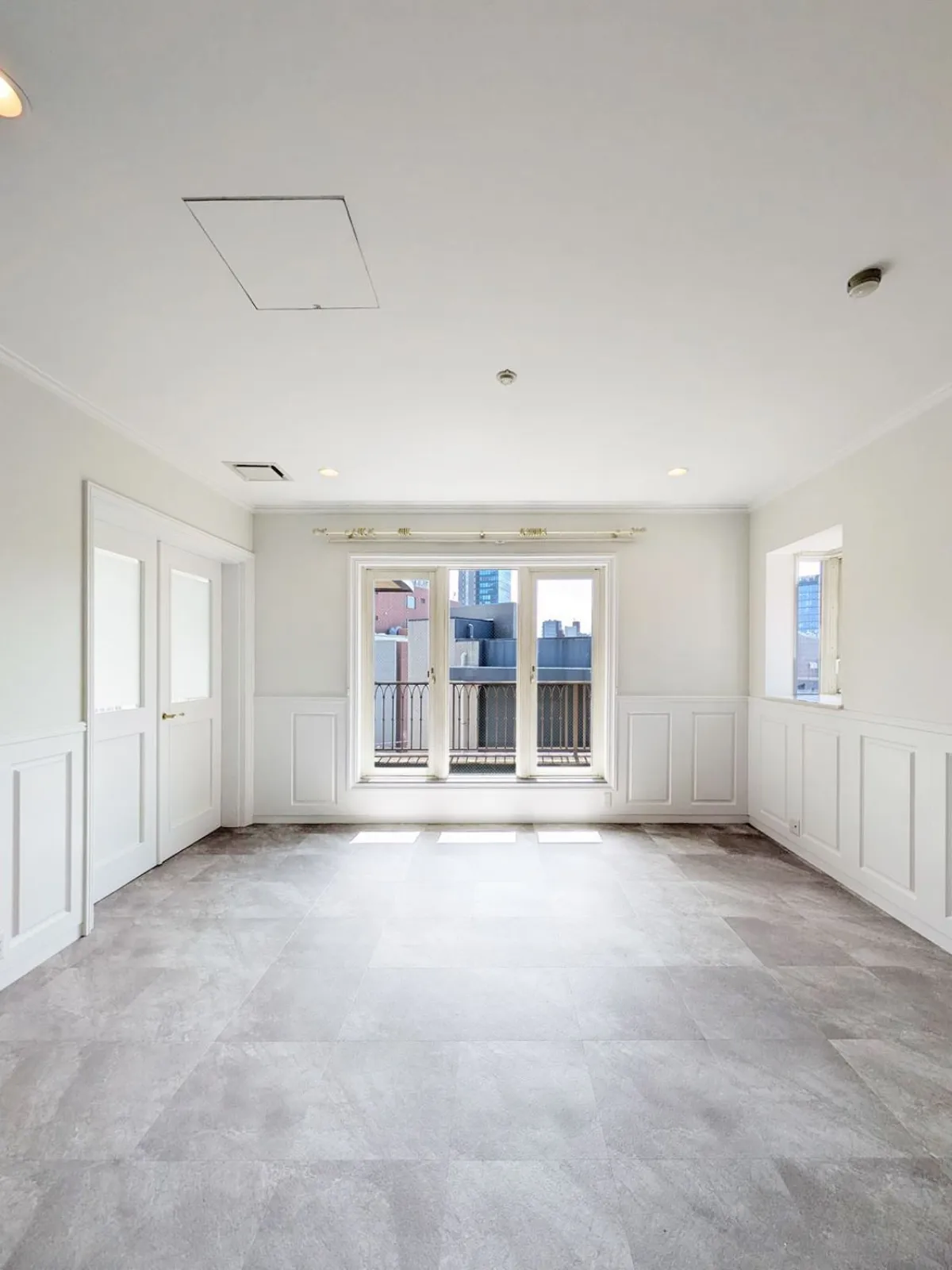
Illustrative image
Results at a glance
Results at a glance
Key metrics
Area market rent (per tsubo)
~¥6,000/ tsubo · month
This building's asking rent
~¥9,600/ tsubo · month (≈1.6× market)
Launch to full occupancy
2.5 monthsall 12 units leased in sequence
Works per unit (interiors)
~¥6Mfull strip-out cost for a 35-yr 2LDK
Total construction cost
~¥100Minteriors + common areas
NOCOS role
Brokerage & managementproject lead / construction by specialist firm
Project profile
Property & project profile
Location
Yokohama, Kanagawa (major private-railway hub area with direct access to central Tokyo)
Structure / scale
4-storey RC, 12 units total
Completed
1987
Layout
2LDK (approx. 56㎡)
Project scope
All 12 units: full strip-out + equipment replacement / major common-area repair / new auto-lock entry
Renovation completed
March 2022
NOCOS role
Brokerage & management / construction by a specialist renovation firm
* Out of consideration for privacy, the location is given only to the city level.
Background
At 35 years old: keep it, or let it go?
A 12-unit RC building completed in 1987. At the 35-year mark, the real question was "patch it up, or rebuild from the structure and keep it for the next 30 years."
The owner chose neither partial repair nor phased renovation, but the heaviest option: strip all 12 units back to the shell at once, replace every system, and carry out major common-area repair plus a new auto-lock in a single pass.
Reset the rent once, lift competitiveness a notch, and keep the building for the next 30 years. NOCOS led the whole effort — project design, coordination with the construction firm, leasing, and post-occupancy response.
Keep the building, keep the rent, keep the residents — from start to finish, the project turned on that single axis.
01 — Investment
Built to "keep it for 30 years": total replacement, not addition
With a 35-year-old RC building, the hardest call is where to draw the line. Patching with surface-level refits was an option. But this project worked backwards from a different premise:
Strip interiors back to the shell and fully replace systems (plumbing, electrical, HVAC, wet areas)
Carry out major common-area repair at the same time (align timing of exterior walls, waterproofing, steel-part painting, etc.)
Add an auto-lock to lift an older RC building's security to a near-new standard
Works per unit on the order of ~¥6M (interior renovation)
Total works for interiors + common areas on the order of ~¥100M
The main reason for committing at this scale at once: comparing "the cost of patching to extend life" against "the cost of a clean restart" ten years out, the latter is often cheaper. Rent erosion accelerates when systems, common areas, and overall impression age at the same time — so you reset all three at once.
02 — Design
Write the "no disputes for 10 years" terms into the contract and the drawings
Precisely because everything from common areas to interiors was being renewed, we spent the design phase heading off operational disputes before they could happen.
Common area: operating design for the new auto-lock
A new auto-lock is not just hardware selection. Before move-in, we fixed the operating rules — keys per household, the lost-key reissue flow, integration with the delivery boxes — and built them into the lease documents and the move-in guide.
What causes the most friction with a retrofitted facility is not the machine itself but the absence of operating rules.
Interiors: "write the constraint into the contract, then remove it after the works"
The distribution-board upgrade could not be finished within the main renovation schedule. NOCOS's chosen approach was to state the constraint clearly to residents, then lift it later.
Add a clause to the move-in lease setting an electrical capacity cap of 40A
At the same time, fix the schedule for the later distribution-board upgrade with the owner
After the upgrade was complete, renegotiate individually with each resident and remove the cap clause
Interiors: judging a substitute for the AC pipe cover
When the original spec stalled in the contractor's supply line, we proposed a substitute and proceeded with the owner's approval, re-planning the schedule backwards from the handover date of the first unit to start its lease.
Interiors: heat-dissipation clearance for outdoor units
We secured about 10cm of space above the wall-mounted outdoor units — a design decision to lower future failure rates, again specified only after explaining it to and agreeing it with the owner.
None of this is flashy. But it is exactly these "decide it early and avoid disputes for ten years" calls that keep rent and residents over the long run.
03 — Leasing
A grounded strategy for posting 1.6× the market
What took the most care in this project was the rent setting.
Area market rate: ~¥6,000/tsubo
This building's asking rent: ~¥9,600/tsubo (about 1.6× the market)
Posting 1.6× the market on a 35-year-old building is, by conventional instinct, "a rent that will never lease." That it reached full occupancy in 2.5 months breaks down into three structural reasons.
Reason 1: reframe the location premium to the fullest
A major private-railway hub within 30 minutes of a central Tokyo terminal is a setting you can reframe from "convenient despite being old" to "chosen even though it's old, because it's convenient." Once the full strip-out, equipment replacement and new auto-lock erase the penalty of dated interiors and systems, only the location's plus points remain.
Reason 2: don't miss the pandemic tailwind
Leasing began in early 2022. With remote work settling in, demand for suburban, larger layouts (2LDK, ~56㎡) was temporarily strong — a rare tailwind for an older RC building, and we moved quickly to capture it.
Reason 3: use 12 units as leverage with agents
A single renovated unit is an "introduce it on the side" listing for a letting agent. But 12 units re-branded together become "a property worth bringing clients to."
With letting agents in the central-terminal area in particular, NOCOS ran continuous leasing activity and deliberately built a relationship of "bring clients here and they'll sign" and "do so and you'll get priority introductions on the next property." What made 1.6× rent work was not rent advertising but designing reasons for agents to act.
Handling the last unit
Even so, the final unit lingered once the first wave of demand had passed. We raised the advertising fee (AD) to two months for that unit only, clearing it quickly and precisely. The result: full occupancy of all 12 units within 2.5 months of launch.
Keeping a building full is not about cutting rent across the board — it's the structural call of where, how much, and when to apply the remedy.
04 — Post-occupancy
Keep six months of response on record
Handover is not the finish line. In the first months after move-in, minor defects always surface. Examples where NOCOS acted on the owner's behalf:
Unit A (March 2022): a loose, draughty window sash. A partner firm filled the gaps with moulding and caulk and adjusted the living-room window crescent lock.
Unit B (April 2022): a loose entrance-door stopper. As it fell within the renovation scope, it was escalated directly to the construction firm.
Unit C (April–June 2022): a move-in defect — a missing door chain and a blurry door scope. The chain was fitted and the scope replaced on May 24, with completion reported June 1.
Each job is small. But leaving residents with the felt signal that "there's a management company that moves the moment you ask" is the real engine of retention. Not rent, not interiors — the speed and the record of response are what bring the next renewal and the next resident.
Takeaways
Structural lessons worth keeping
At 35 years, design it as "the upfront investment to keep it for the next 30," not as an extension of repairs.
Reset interiors, common areas and security (auto-lock, etc.) at the same time. They age together, so replacing them together is cheaper over the long run.
Set per-unit investment by comparison with competitors, not by working backwards from rent. Here that was ~¥6M per unit, ~¥100M total including common areas.
Design the reasons agents act before you advertise rent. Re-brand 12 units together into "a property that signs," and build ongoing relationships with agents in a specific area — rent advertising is the last remedy; the core is relationship design.
Re-brand rent by releasing all units at once. Phased release leaves old and new rents side by side and makes upward revision hard.
Don't cut across the board. Apply the remedy only to the last one or two units.
Handover is not the end but the start of six months of partnership. A record of response keeps residents — and keeps the rent.
What NOCOS provides is neither a rent appraisal nor management outsourcing, but the chain of structural decisions that "keep" an asset.
FAQ
Frequently asked about this case
How much does whole-building regeneration of a 35-year-old RC cost per unit?
In this case (Yokohama, 1987-built, 12-unit RC), a full strip-out plus complete equipment replacement of interiors ran ~¥6M per unit. Adding major common-area repair and a new auto-lock, total works were on the order of ~¥100M. The investment was set not as "a cap derived from rent" but from the level needed to be chosen against competitors, including newer and brand-new stock.
What lets an older RC post above-market rent after a full renovation?
Four conditions made 1.6× (¥6,000→¥9,600/tsubo) work here: ① a location premium (within 30 minutes of a central terminal), ② resetting systems, common areas and security all at once, ③ re-branding rent by releasing all units simultaneously, and ④ relationship design with letting agents in a specific area. Rent advertising is the last remedy; the core is relationship design.
What's the benefit of renovating 12 units at once versus phasing it?
Phased renovation leaves old and new rents side by side in the market, making upward revision hard. Re-branding all units at once lets the market re-appraise the property as "post-rebrand," so above-market rent is easier to establish. It also turns the listing from an "introduce on the side" into "a property worth bringing clients to" for agents.
What matters when retrofitting an auto-lock onto an older building?
Operating-rule design matters more than hardware selection. Here we fixed, before move-in, the number of keys per household, the lost-key reissue flow, and integration with the delivery boxes — all written into the lease documents and the move-in guide. The biggest source of friction with a retrofit is not the machine but the absence of operating rules.
How do you explain equipment works that can't finish in time to residents?
Here the distribution-board upgrade couldn't be finished within the bulk works, so we wrote a 40A electrical-capacity cap clause into the move-in lease. Once the upgrade was done, we renegotiated individually with each resident and removed the cap. Running that round trip of "write it first, remove it later" is what keeps the relationship with residents over time.
How long did it take to reach full occupancy from launch?
Full occupancy of all 12 units within 2.5 months of launch (early January 2022). Most signed around completion (March 2022); the last unit was cleared quickly by raising the advertising fee (AD) to two months. The driver of full occupancy was not across-the-board rent cuts but the structural call of where, how much, and when to apply the remedy.
What is the agent relationship design behind making 1.6× rent work?
With letting agents in the central-terminal area, NOCOS ran continuous leasing activity and deliberately built a relationship of "bring clients here and they'll sign" and "you'll get priority introductions on the next property." Re-branding all 12 units together makes the building "worth bringing clients to," raising its referral priority even at above-market rent.
Your property, too, can make the "keep it for the next 30 years" call.
For full renovation of older buildings, common-area repair, or rent re-branding, talk to NOCOS. We'll hear out your property's situation and propose a starting point grounded in structural decisions.