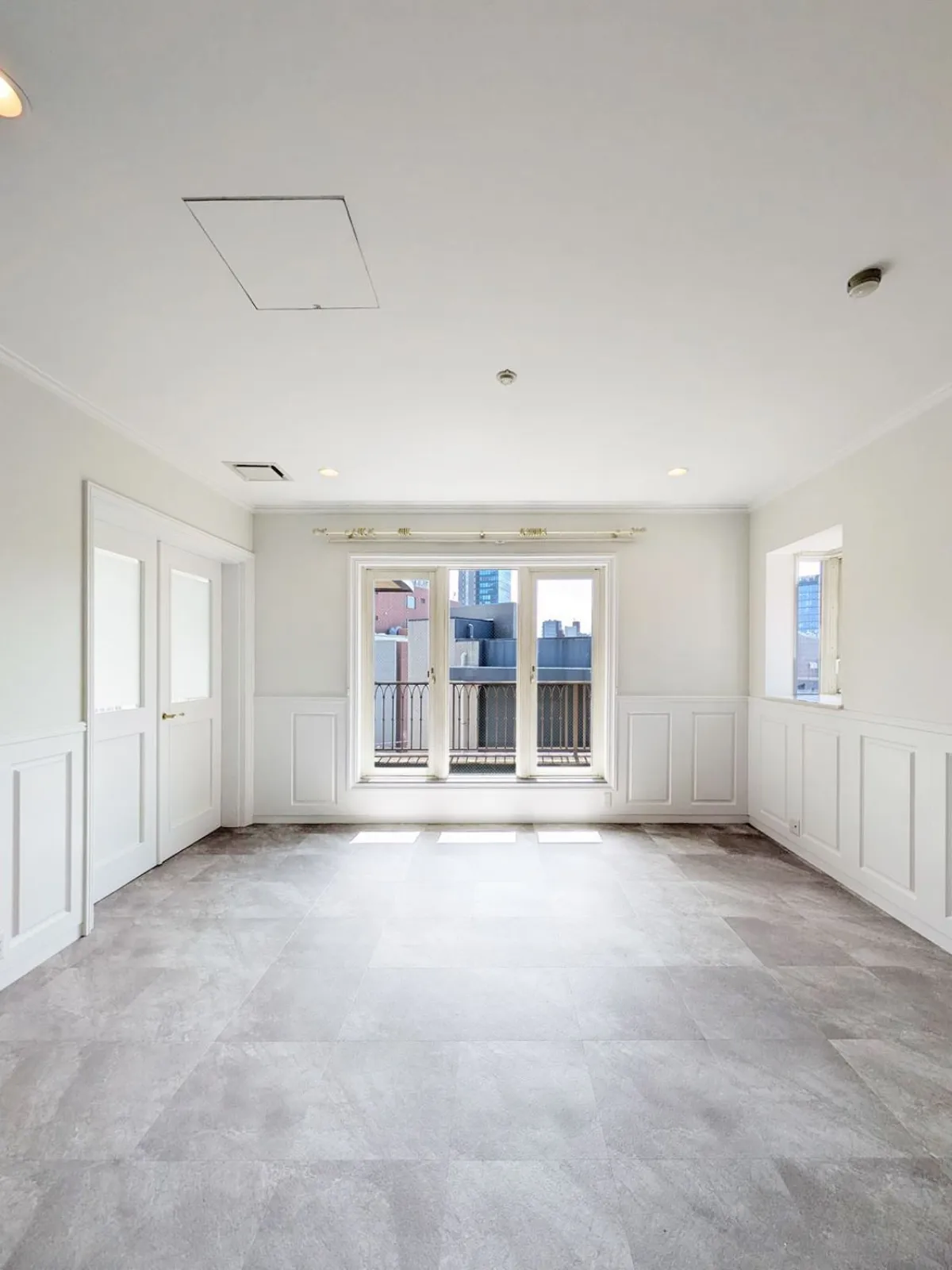
Case 04 / A residence in Shibuya, Tokyo (formerly owner-occupied)
Turning the owner's home into a premium Shibuya rental.
Not a restoration, nor a kitchen-only refit. To turn 150㎡+ of potential into rent, we judged the investment's validity from rent-appraisal logic and carried out a full renovation. An application came 4 days after handover; target rent ¥1M/month (about 1.5× current).
Illustrative image
Results at a glance
Results at a glance
Key metrics
Handover to application
4 dayshanded over May 1 → applied May 5
Launch/viewings to signing
within a weekmany viewings gathered
Target rent
¥1M / monthabout 1.5× the current rent
Floor area
over 150㎡a rare size in Shibuya
Renovation scope
Renovationowner-occupied → redefined as premium rental
NOCOS role
Brokerage & managementproject lead / construction by specialist firm
Project profile
Property & project profile
Location
Shibuya, Tokyo
Type
A residence (formerly the owner's own home in an apartment building)
Floor area
Over 150㎡
Project scope
Renovation (not a restoration or partial refit)
Handover
May 1, 2026
Signing
Application on May 5 / signed within a week of launch and viewings
NOCOS role
Brokerage & management / construction by a specialist renovation firm
* Out of consideration for privacy, the location is given only to the ward level.
Background
An owner's home: let it via restoration, or via redefinition?
A unit the owner of an apartment building had lived in as their own top-grade home. In converting it to a rental, the fork was "restore it and let it as-is, or rebuild from the structure and redefine the asset."
In Shibuya, over 150㎡ is in itself an extremely rare strength. But a restoration or kitchen-only refit can't convert that size and location into rent. What NOCOS proposed was to judge the investment's validity from rent-appraisal logic, on a renovation basis.
Size and location only become rent once matched by interior quality. This project was the work of translating rare potential into "achievable rent."
01 — Investment
Don't set the budget by feel — derive validity backwards from rent
The first thing we organised was neither interior taste nor the scale of works, but the rent-appraisal logic.
After renovation, appraise how much rent this location, size and interior could command in the market
Working backwards from target rent and yield, first set the line of "if this rent is achievable, the budget is valid up to here"
Then carefully weigh cost-effectiveness and propose only after judging "this budget is valid"
Restorations and kitchen-only refits start from "how much will it cost." But for a high-cost renovation of a unit with potential, the order is reversed. First decide "how much it can let for," then derive "how much you may invest." Not stacking up the budget by feel is what leads to neither over- nor under-investment.
02 — Design
The premium-rental "craft", chosen at the material level
Once the rent ceiling is set, the next question is how to build "a unit chosen at that rent." What NOCOS valued here was the accumulation of small, deliberate moves unique to premium rentals.
The yardstick: not "lavishness" but "does it hold up against neighbours"
A common trap in premium rentals is spending to make things lavish. But prospective residents always compare against nearby competitors (new high-grade and large-unit rentals). So the yardstick was consistently "does this material hold its own next to the neighbouring properties."
Selecting each material individually
Rather than deciding flooring, joinery, wet areas, lighting and paint together by grade, we examined and selected each at the material level. That accumulation of details, each considered individually, came across as a "difference in class" at viewings and led to the fast signing here.
It isn't about flash. The heart of this project was finishing 150㎡+ of rare space — through material quality — into "a space that converts into rent."
03 — Result
An application in 4 days, many viewings against the target rent
The result came at a speed unusual for a premium rental.
May 1, 2026 — renovation complete, handover
May 5 (4 days after handover) — application
Signed within a week of launch and viewings
Against the target rent of ¥1M/month (about 1.5× current), a very large number of viewings gathered
Why so fast? It breaks down into three factors.
① Rarity: 150㎡+ in Shibuya — a low-supply condition — lifted the pool of prospects itself. ② Interior quality: the finish, selected at the material level, conveyed "the value of this rent" the moment people viewed it. ③ A basis for pricing: because the rent was a "justified boldness" backed by appraisal logic, it felt reasonable even at a high level.
Fast signing and a high rent band can coexist. The key is aligning the basis for the rent (appraisal logic) with the interior quality that backs it up.
Takeaways
Structural lessons worth keeping
Design letting an owner-occupied home as "redefining the asset," not "restoration." The more potential in location and size, the more wasteful it is to keep the status quo.
For high-cost renovations, verify the investment's validity first by working backwards from a rent appraisal. Don't stack the budget by feel — "how much it can let for" decides "how much you may invest."
Rarity (150㎡+) only converts into rent when matched by material quality. Size alone doesn't raise rent.
For premium rentals, choose each material by "does it hold up against neighbours," not by lavishness.
Justified bold pricing is compatible with fast signing. A rent with a basis is accepted even when high, and lets quickly.
What NOCOS provides is neither a rent appraisal nor management outsourcing, but the chain of decisions that "translate potential into achievable rent."
FAQ
Frequently asked about this case
When letting a unit the owner used to live in, is a restoration enough?
For a unit with potential in location and size, a restoration or kitchen-only refit won't reach the rent it could truly command. In this case (Shibuya, 150㎡+), we organised the rent-appraisal logic on a renovation basis and decided the scope only after first determining "how much to invest to let it at what rent." Restoration is the status quo; renovation is redefining the asset.
How do you judge whether a high-cost renovation budget is valid?
Don't set the budget by feel — work backwards from rent. Appraise "how much rent this location, size and interior could command," then, from target yield, set the line of "if this rent is achievable, the budget is valid up to here." In this case, we proposed only after carefully verifying cost-effectiveness with this rent-appraisal logic.
Is a unit larger than 150㎡ advantageous as a rental?
In a central area like Shibuya, supply of 150㎡+ units is extremely scarce, so rarity itself becomes a strength. That said, size only converts into rent when matched by interior quality. Here, to make the most of the rare floor area, we raised interior quality to the level of nearby high-grade properties through material-level selection.
What should you prioritise in a premium-rental interior?
Not "making it lavish" but "holding its own against nearby competitors." Here we selected flooring, joinery, wet areas, lighting and paint one by one, comparing each against nearby high-grade properties. The accumulation of premium-rental detail — the small "craft" — directly drives the viewing impression and a fast signing.
Even at a high band like ¥1M/month, does it let quickly?
Here, an application came on May 5, four days after handover (May 1, 2026), and it signed within a week of launch and viewings. Against the ¥1M/month target (about 1.5× current), many viewings gathered. When "justified bold pricing" grounded in rent-appraisal logic aligns with interior quality, fast signing is compatible even at a high band.
Your unit, too, may hold "achievable rent" waiting to be unlocked.
For letting an owner-occupied home, judging the validity of a high-cost renovation, or leasing a premium rental, talk to NOCOS. We'll hear out your property's situation and propose a starting point grounded in rent-appraisal logic.